
The Struggle for Freedom of Movement in the ‘Automobile City’
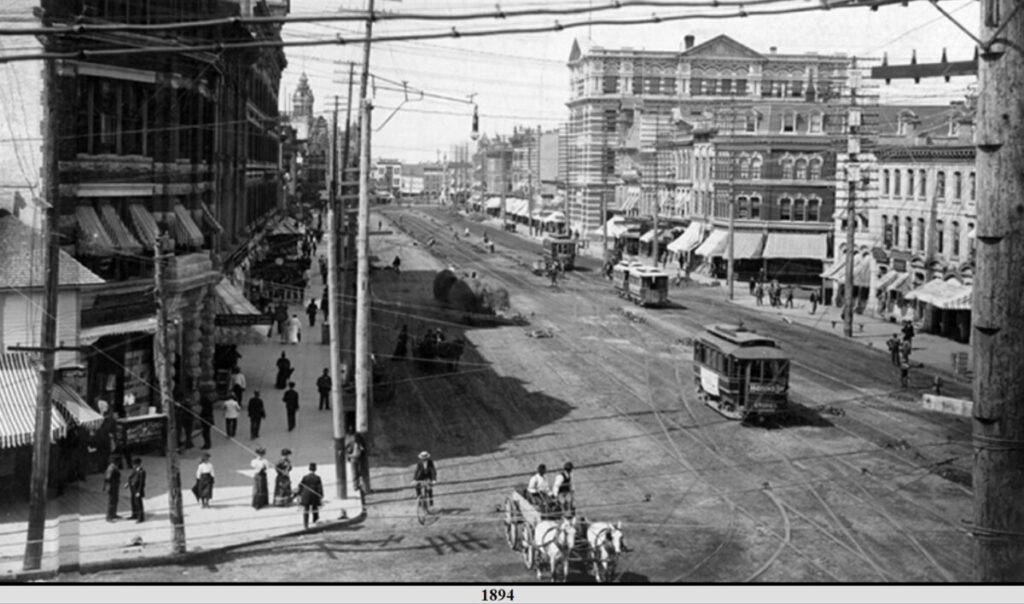
Go back to a summer afternoon in 1894 on Main Street in Winnipeg. In the photo below, you get a fascinating look into a world where streets were not owned by a single mode, but shared and accessible to everyone. This sharing had disappeared by 1950, and across North America ‘progress’ required unlimited car access, high traffic volume and faster speeds. This new reality became so normalized, that people today have no way to see a different, more equitable possibility.
We’ve achieved the total supremacy of motor vehicles in every aspect of Steinbach. After 100 years of car dominance, where can citizens go to see what a healthy, multi-modal city would look like? Thankfully, there are a few places on our planet where cars truly ‘share the road’. Too often though, the built-in prejudice against sharing roads, forces our civic leaders to focus on reasons why such a model of balance could never work in Steinbach. Here, where winters are far too cold, where no buses run, where sidewalks are missing or end abruptly, where bike sharrows are parking lanes, and where grocery stores are mostly on the distant edge of town.
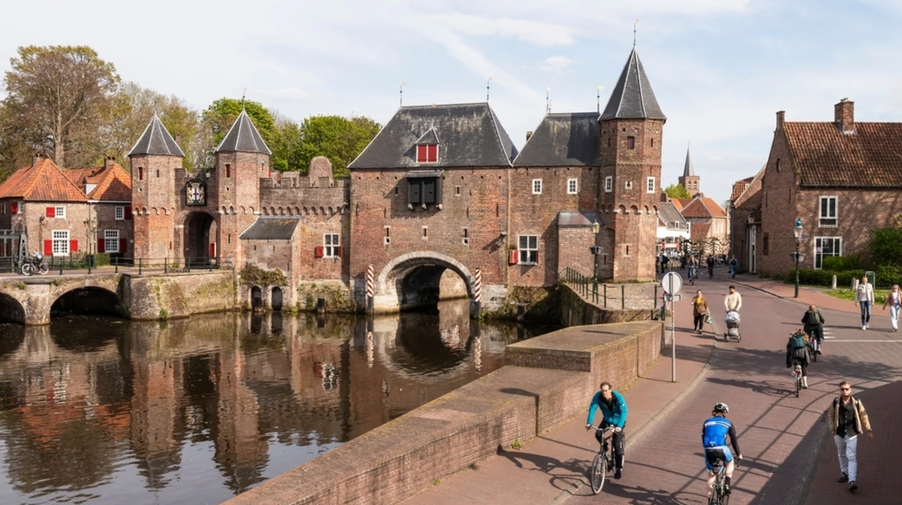
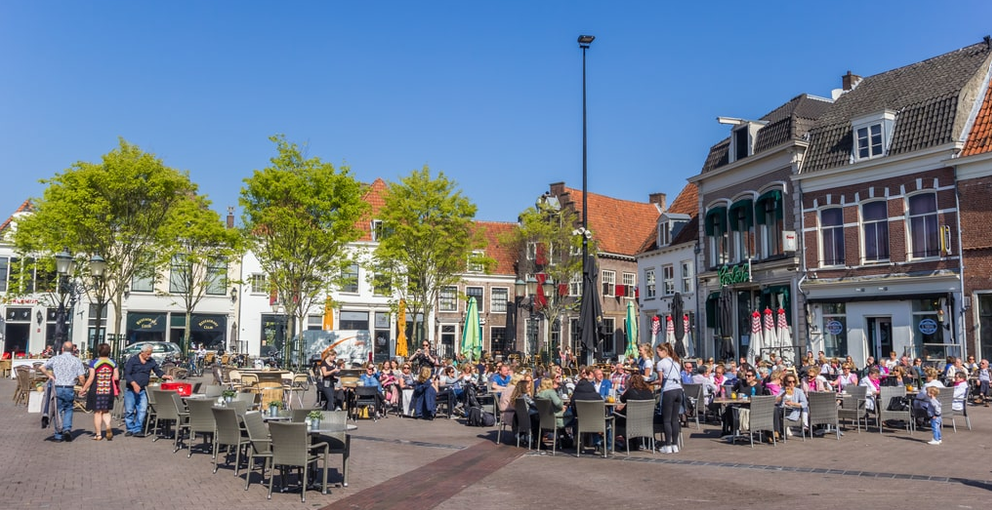
It’s just before 7:30am in old Amersfoort (50km southeast of Amsterdam). I hop on my bike for the 5-minute ride to the bakery. Down cobbled streets filled with locally owned shops, across a plaza lined with cafes and over a quaint stone bridge. Along the way I pass residents on foot, on bike and a handful of cars, moving at 20-30 km/h, clearly aware of the shared urban spaces they pass through. I return with a pannier full of fresh baked goods to go with the jams and cheese from the grocery shop a block from our rental.
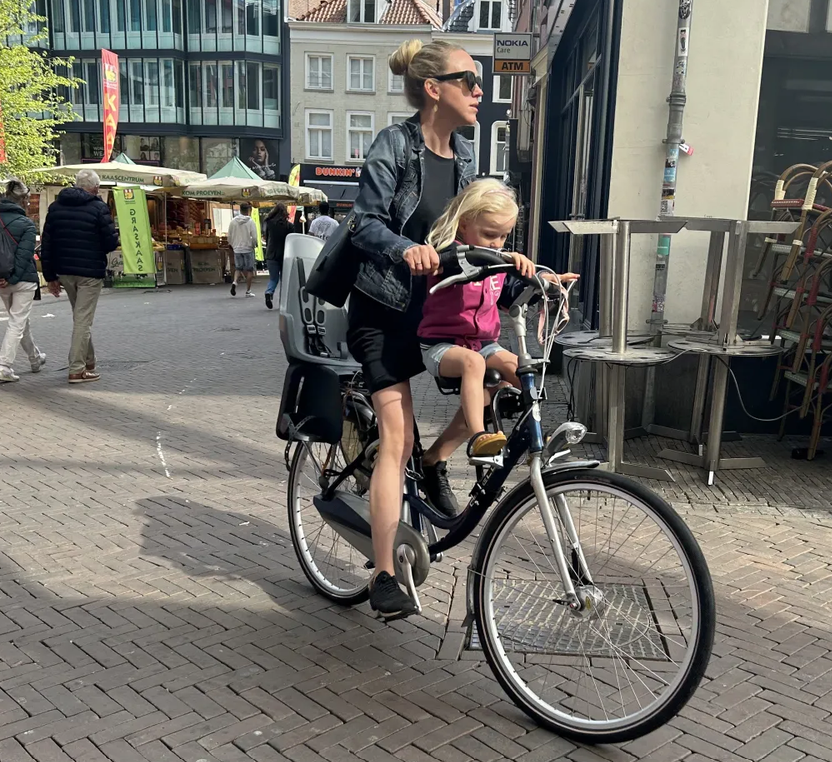
After breakfast our group heads out to look for coffee. Clusters of children ride past on the bike path, laughing and talking on their way to school. Three young women are riding side by side on the road, enjoying each other’s company. It’s been two weeks of seeing this. A conspiratorial mind might claim the Dutch tourism board has hired hundreds of skilled actors to ride past us each day with instructions to smile, laugh, banter and generally create an air of happiness and contentment. If so, I’ve been totally taken in!
Dutch bike riders are unfazed by wind and rain. They have 217 rainy days per year but are pragmatic to the core. Rain jackets and umbrellas are kept ready. I’ve seen carpenters, riding cargo bikes filled with tools and lumber, a mother with her two kids plus a dog, an elderly couple riding side by side – holding hands, a sharply dressed man with a briefcase, carrying flowers and two bags of groceries in his front basket. Everyone at ease. There’s no sense that any of these riders require extra courage, determination, or even a helmet to ride wherever they want to go. They act as if they are respected, equal, safe.
The Dutch have two big advantages over us, and it may surprise you that they’re not nice weather or short distances.
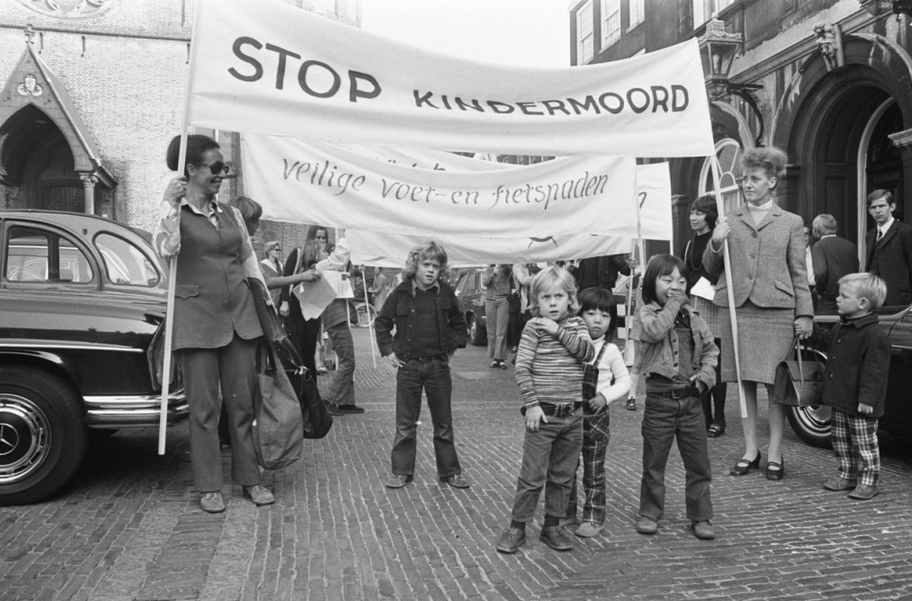
When it comes to city life and how their cities work, they stand up for reasonable solutions that are fair. In the late 1970’s they faced the evidence: total car reliance was bad for society as a whole and made cities unfriendly. Citizens blocked roadways to protest the growing number of children being struck down by cars and the highway development that was destroying historic downtowns. They achieved a victory for balanced development that kept people’s safety and equality, not speed or traffic flow rates, as the benchmark for success. Today the Netherlands, despite having millions more daily bike commuters than Canada, has 1/3 the number of cycling deaths.
Secondly, city planners in the Netherlands, made the discovery that street design governs safe motorist behaviour. They also learned that speed signs and enforcement actions had relatively weak effects on driver behaviours. They decided to implement evidence-based design measures and as a result achieved one of Europe’s lowest accident rates. The philosophy that guides Dutch city design envisions highways, ring roads and major collectors for primary car use. But, on two lane urban and residential streets, the car is to act as a guest, ensuring pedestrians and cyclists have priority in all cases. The universal speed for all two-lane city streets is 30 km/h.
Across North America, with only a few exceptions, we design cities that overwhelmingly prioritize cars over all other forms of movement. The downside of this design choice has made us unwell, ballooned health costs, and burdened all of us with road repair bills that simply cannot be sustained. We have to find a better way. As Enrique Penaloza, a two-term mayor of Bogata, Colombia, aptly observed: “A city can be friendly to cars, or a city can be friendly to people. It can’t be both.”
Are you ready to re-think how we can build our city to be more friendly to people? If you want to explore what that looks like and how it can happen, join your local Strong Towns conversation. See the “Events” page for details of the next local meeting.