
It’s another warm October evening at the corner of Main and Reimer.
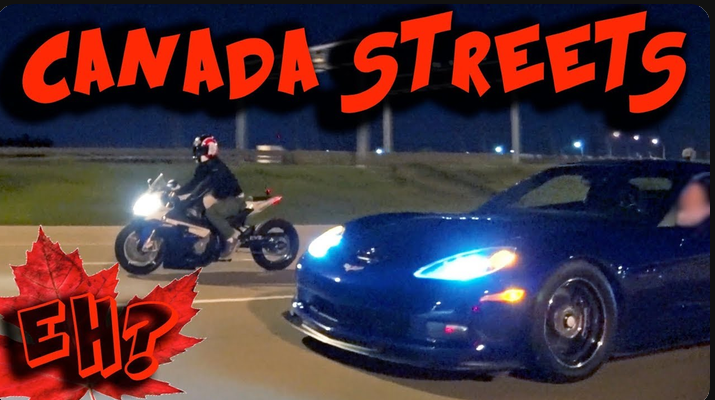
My head instinctively turns as the quickening roar of an engine becomes a scream. It sounds like something out of a war movie. I know it’s not an aerial dogfight over a beleaguered London. Still, I instinctively wait for the explosions, and here they come, rapid-fire pops and booms as the Nissan that took off from the light, now decelerates and sends raw gas into its exhaust. A group of five motorcycles, sounding like oversized mosquitoes, leave the intersection heading east. As the traffic light at Lumber turns green, they accelerate hard, engines howling, rocketing to speeds above 120 km/h. My heart is pounding and I wonder what has allowed this once friendly downtown to become such a threatening soundscape?
In 1940 London, the RAF always had a few dozen Hurricanes and Spitfires waiting for the Luftwaffe. In Steinbach, most nights there is no one going aloft on behalf of our besieged citizens. At least in London defenders quickly realized that enforcement alone was not enough. They knew that changing the battlefield airspace above the city was of the utmost urgency. They tethered hundreds of dirigibles, turned off all ground light sources, and threw the gaze of five hundred spotlights into the eyes of German pilots and bombardiers. If only Steinbach’s leaders had the same creative energy and determination!
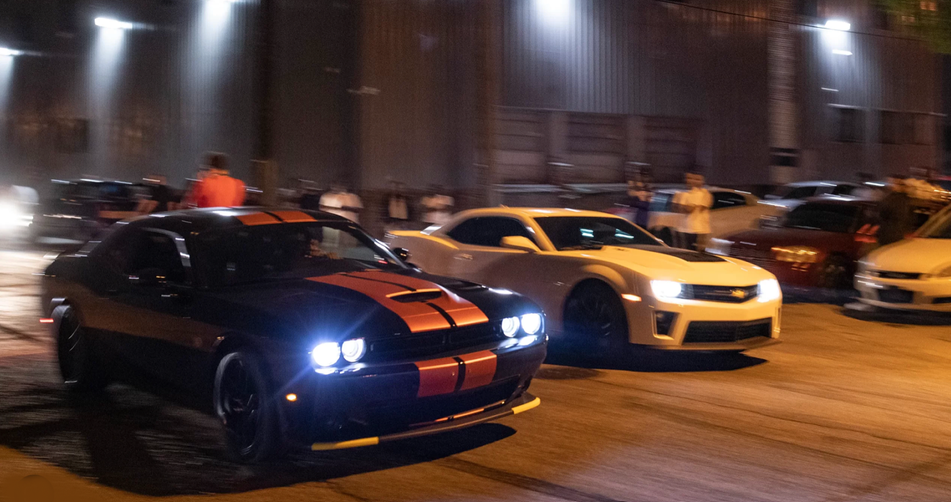
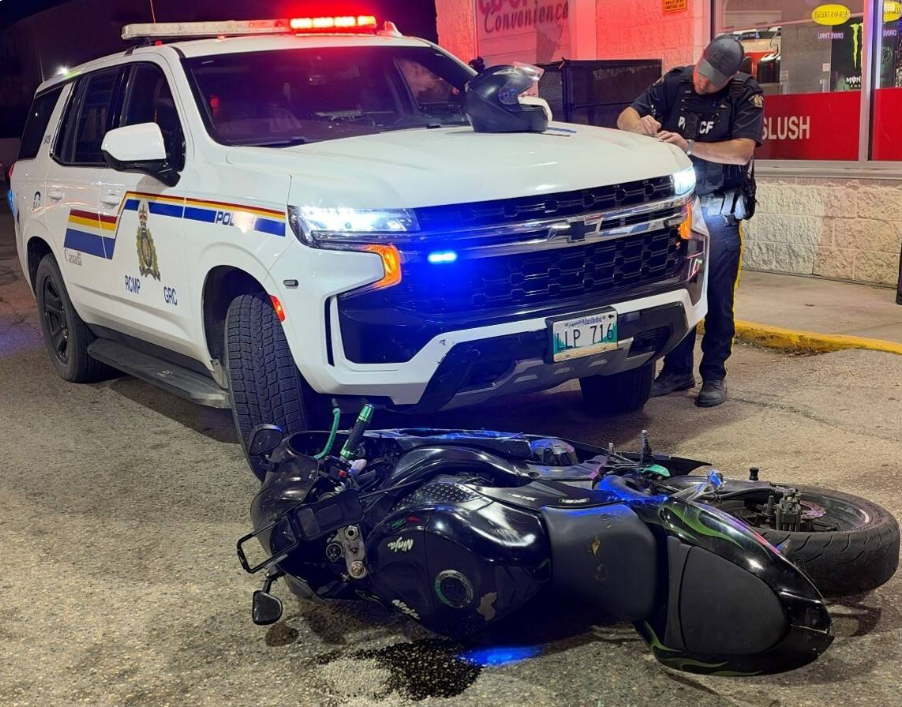
To be sure, our blitz is nothing like the real one. There have been accidents, some injuries, minor property damage and a downtown that is truly inhospitable to people most spring, summer and fall evenings. For citizens this is surely the most galling aspect of the road-borne pestilence: these scofflaws are taking away the joy of a peaceable existence for anyone on or near Main Street.
While a comparison to 1940 London is too dramatic there is a sense that our fight to regain our streets will be a much longer campaign. Let’s start it by doing something overdue – changing our tactics to go after the causes and not just the outcomes of street racing. Only, when we roll out our version of dirigibles and spotlights, will the racers realize that their little game of blitz is over.
The turning point in our battle against street noise and racing begins with a study of what other cities have achieved. When we look at places that have turned the tide, we can see three initiatives that work:
1) Street Redesign – This is the most important initiative. Racers are attracted to wide, smooth streets, ideally with two or more lanes in each direction. Above all they desire attention, and downtown main streets offer the perfect stage. A redesign will narrow the existing lanes to create higher “edge friction” – which automatically warns a driver’s brain to slow down. Often this effect can first be created with paint but ultimately is most effective with a physical reduction in lane width. Lane narrowing works even more effectively when combined with raised crosswalks. These are not speed bumps, but a 3-4-meter-wide (10-12’) platform that is gently sloped to be 15 cm (6”) above the street. It does double duty, alerting all drivers to the pedestrian crossing, but also acts on driver minds in the same way as edge friction. An added benefit: low clearance ‘tuner car’ suspensions may also bottom out when crossing these at faster speeds.
2) Car Inspection Check-stops – Federal and provincial laws set out a long list of requirements for street-legal vehicles. Police may be aware of these but rarely enforce all of them. Cars that are modified for grandstanding will often break one or several of these laws:
• Dark tinted windows that hide driver and front passenger faces
• Wheels that extend beyond the vehicle’s body
• Improper exhaust systems missing components or creating excessive noise
• Obscured or altered license plates
• Fuel mapping devices that allow raw gasoline to reach the exhaust manifold, creating loud bangs on deceleration. In diesel trucks similar devices can be used for generating excessive amounts of thick black exhaust (aka “rolling coal”).
• Daytime running lights disabled. These are federally required for all vehicles produced after 1991 and must be maintained by car owners.
A series of safety check-stops should be implemented to identify illegal modifications. Owners would then required to take their vehicle to an approved garage and have all items brought back into compliance. Failure to do so results in offending cars being denied registration renewal.
3) Noise and Speed Detection – This is not mass surveillance, but a system that tracks the sound level on Main Street and captures only the images of excessively loud vehicles and those going 20km/h or more above the speed limit. Having real data on noise and speeding is the best way to determine the effectiveness of changes to the street, enforcement measures, and driver education efforts. Even scofflaws are people of time, place, and routine. Data will help focus our searchlights on these worst offenders.
By May 1941 the Luftwaffe had lost so many aircraft and crew that the skies over Britain were now controlled by Allied air power. In Steinbach the end of our Blitz will usher in an age of new possibility – a Main Street that will attract more business, an evening destination for families, and a more appealing place for residential development. And most important of all, when we succeed, we will have retaken our city’s most important street and made it better for the people who live here.